









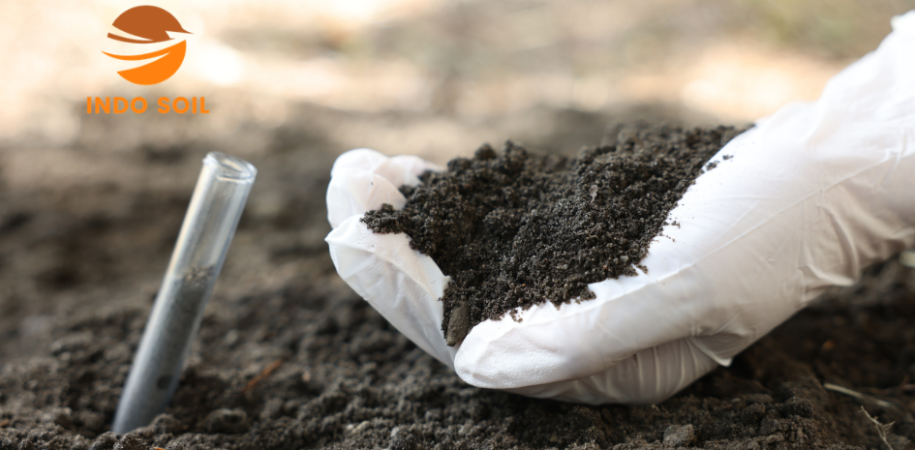

Before breaking ground, one fundamental question must be answered: how strong is the soil at your project site?
Understanding soil conditions has become increasingly important as construction activity accelerates across Bali, Lombok, and Nusa Tenggara.
Many landowners and developers underestimate the importance of soil investigation.
They only realize its value after serious structural problems appear.
These issues often lead to expensive repair costs.
Why Property Soil Testing Bali Is No Longer Optional
Rapid development across Bali and Eastern Indonesia has increased geotechnical risks in construction projects.
Understanding soil testing for property development in Bali is no longer optional.
It has become essential for investors and developers.
According to the Federal Highway Administration (FHWA) Geotechnical Engineering Circular No. 5, accurate soil evaluation directly determines structural safety and foundation design.
For accurate results and reports accepted by local authorities, Indo Soil is ready to assist with over 100 completed projects across Bali.
Baca Juga / Read Also: Soil Test Investigation for a Development Site in Pecatu, South Kuta Bali
Key Geological Factors That Influence Soil Conditions in Bali
Every site across Bali, Lombok, and NTT has unique geological characteristics that affect construction planning.
Limestone soils dominate South Kuta, clay soils appear in northern Bali, and volcanic formations are common in Lombok. Each soil type requires a different engineering approach.
Understanding these variations is the key to making sound, data-driven technical decisions.
The USGS National Geologic Map Database confirms that regional geology plays a decisive role in determining soil bearing capacity and foundation risk. That is exactly why property soil testing Bali must be site-specific, not generic.
Indo Soil provides professional soil testing services with experience from more than 100 completed projects across Bali.
Indonesian Standards and Regulations You Must Comply With
All geotechnical work in Indonesia must comply with relevant SNI (Indonesian National Standards). The key standards include SNI 2827:2008 for Cone Penetration Test (CPT/Sondir), SNI 4153:2008 for Standard Penetration Test (SPT), and ASTM D5778 for electronic piezocone testing. Compliance with these standards is not just about technical quality — it also determines the legal validity of your reports for permitting (SLF/PBG) and insurance claims.
The ISO 22476-1 standard further governs electrical cone and piezocone penetration testing internationally. Ignoring these regulations can result in permit rejections and costly rework on your project.
Read Also: Soil Test and Slope Analysis in Carang Sari, Petang Bali
How Indo Soil Supports Your Property Soil Testing Bali Needs
Indo Soil is a Bali-based geotechnical firm serving projects across Bali, NTB, and NTT. Over the past 10 years, the company has completed more than 100 projects.
Whether you need CPT/Sondir testing, SPT boring, topographic surveys, or geoelectric investigation, Indo Soil delivers results you can actually build on. Contact Indo Soil now via WhatsApp: +62 851 3514 2186 or email admin@soiltestbali.com. First consultation is FREE!
3 Critical Details Often Missed Without a Geotechnical Expert
First, soil liquefaction risk is frequently underestimated. According to Youd et al. (2001), ASCE Journal of Geotechnical and Geoenvironmental Engineering, SPT and CPT data are essential tools for evaluating liquefaction susceptibility — particularly critical in seismically active regions like Bali and Lombok. Skipping property soil testing Bali means you are building without this vital safety data.
Second, depth variations within a single plot can be dramatic. Many investors assume soil conditions are uniform across their land, but field data consistently proves otherwise. A single property in Canggu, for example, can transition from soft clay to dense volcanic rock within just a few meters of horizontal distance.
Third, the right foundation type saves significant costs. Without proper property soil testing Bali, structural engineers are forced to over-design foundations as a safety buffer — which adds unnecessary expense. Accurate data allows precise, cost-efficient foundation recommendations. For expert guidance on all three of these critical points, contact Indo Soil today.
Read Also: Comprehensive Soil Test Report for Arkitecna Ltd at Beraban Street, Kerobokan
Conclusion
Understanding What Every Bali Property Investor Must Know About Soil Conditions is the first step that cannot be skipped in every responsible construction project. Accurate soil data is not just a formality — it is genuine protection for your investment and the safety of every person who will use your building. With the right expert support, you can build with full confidence that every technical decision is grounded in facts, not assumptions.
Contact Indo Soil now via WhatsApp: +62 851 3514 2186 or email admin@soiltestbali.com First consultation is FREE!
FAQ — Property Soil Testing Bali | Indo Soil
Q1: What is property soil testing Bali and why do I need it?
It is a geotechnical investigation that determines whether your land is safe and strong enough to support your planned structure.
Q2: How much does a soil test cost in Bali?
Our packages start from Rp 4,000,000 for a basic 3-point CPT/Sondir test covering 0–5 meters depth.
Q3: How long does it take to get the soil test report?
Indo Soil delivers complete technical reports within 5–7 business days after field investigation is completed.
Q4: Is soil testing required for a building permit (SLF/PBG) in Bali?
Yes, a certified geotechnical report is required by Indonesian authorities to obtain SLF and PBG construction permits.
Q5: What types of soil testing does Indo Soil offer in Bali?
We offer CPT/Sondir, SPT Boring, Topographic Survey, Geoelectric, GPR, Geomagnetic, and Seismic surveys.
